
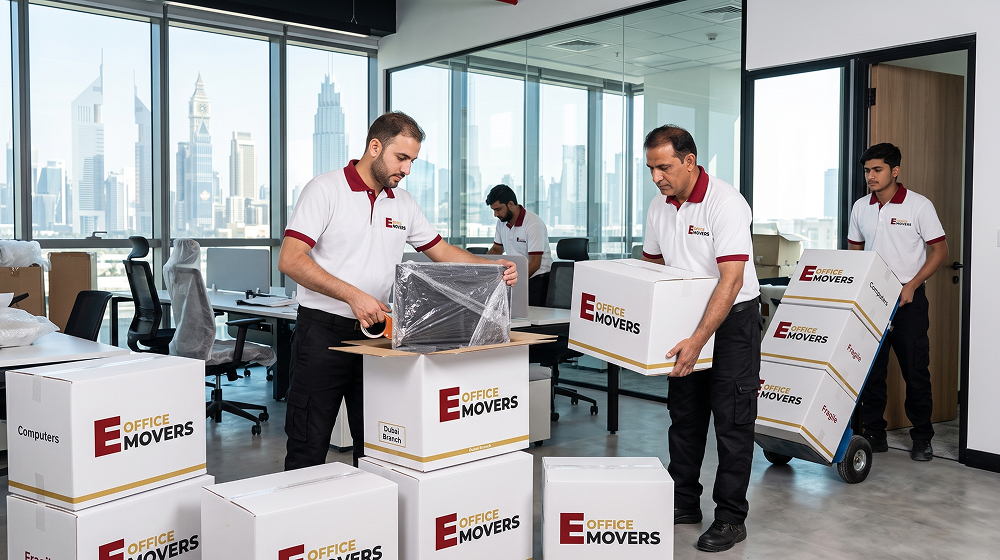
An office move workflow is the ordered sequence of stages a business follows to relocate its premises, grouped into pre-move preparation, the move itself, and post-move settling. In Dubai, that workflow carries extra weight because building access rules, freight lift bookings, tenancy registration and utility transfers all sit inside the same timeline. Get the sequence right and a move feels routine. Get it wrong and the business loses days it cannot bill for.
The stages below walk through the full process in the order it actually happens, from the first site survey to the post-move review. Along the way they cover what office movers in Dubai really do, the types of mover to choose between, the factors that move the price, and how security and access are handled in the city’s commercial towers.
What Is an Office Move Workflow?
An office move workflow is a structured, stage-by-stage process that takes a business from the decision to relocate through to a fully operational new office. It breaks a complex move into three plain stages, pre-move, move day and post-move, so nothing important gets left to chance.
The point of a workflow is sequence. Some tasks unlock others. You cannot label boxes against a floor plan that does not exist yet, and you cannot book a freight lift before you have fixed a move date. A workflow puts these dependencies in the right order so the team is never waiting on a step that should already be done.
For businesses moving for the first time, the workflow also acts as a map. It shows what is coming next, which is reassuring when you are coordinating movers, IT, staff and a landlord all at once.
What Do Office Movers Do in Dubai?
Office movers in Dubai are commercial relocation companies that plan, pack, transport, install and set up a business at its new premises. The role goes well past lifting furniture. A capable office mover surveys the site, prices the job, supplies trained crews and equipment, handles building access logistics, and often manages IT and furniture installation at the destination.
Commercial moving differs from home moving in Dubai for practical reasons. Office towers in areas like Business Bay, DIFC and JLT restrict moves to set hours, require advance notice to building management, and control freight lift access tightly. A mover who works in these buildings every week knows the rules, the right contacts and the timing. A general removals firm learns them the hard way on your move day.
Many Dubai office movers also offer add-on services: short-term storage for phased moves, furniture supply, IT relocation and post-move waste removal. The breadth matters when you want one accountable supplier rather than five.
What Are the Types of Office Movers in Dubai?
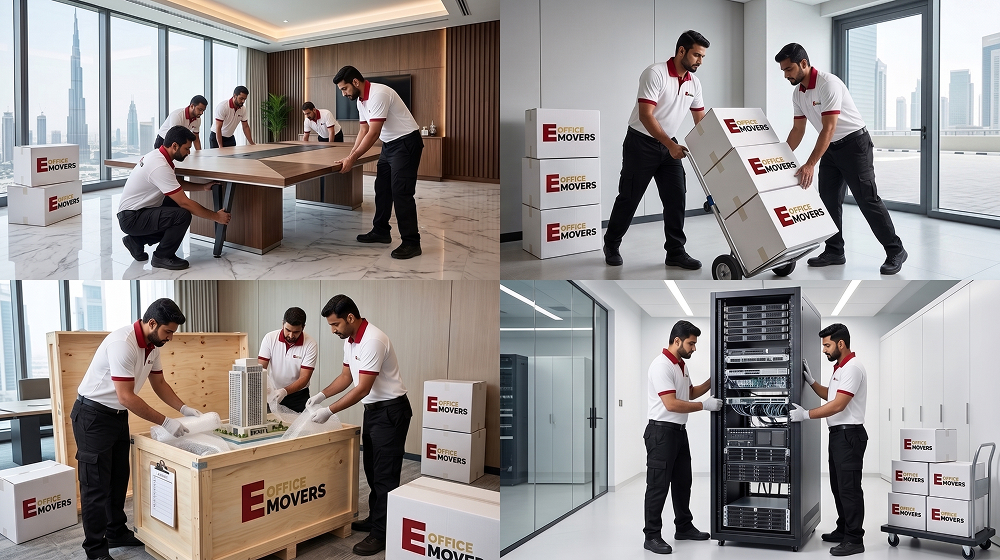
Dubai’s market holds several types of office mover, and matching the type to the move saves both money and stress.
- Full-service commercial movers: These firms handle the whole relocation, packing, transport, IT, furniture installation and setup, under one contract. They suit medium and large offices that want a single point of accountability.
- Specialist IT and server movers: These focus on the high-risk technical move: servers, network infrastructure and sensitive equipment, with the right handling and packaging.
- Budget or man-and-van operators: These cover small, simple moves at low cost. They lack the insurance, equipment and tower experience a corporate move needs.
- International and relocation specialists: These manage cross-border and multi-site moves, handling customs and documentation alongside the physical relocation.
Choosing between them is a topic in its own right, covered in the guide on how to choose office movers. As a rule, match the mover’s experience to your building and your equipment, not just to the lowest quote.
Stage 1: The Pre-Move Stage
The pre-move stage is the longest and the most decisive. Most of the work that protects your move date happens here, weeks before a single box leaves the building.
Site Survey and Assessment
The pre-move stage starts with a site survey, where the mover inspects both premises to scope the volume, access and special requirements. This is when the realistic price and timeline are set, because a quote given without a survey is a guess.
The surveyor notes the furniture and equipment count, the fragile and high-value items, the lift access at both ends, and any item needing special handling. Flag your server room, heavy safes and bespoke furniture early. These shape both the plan and the cost.
Planning and Office Layout
Next, the team agrees on the new office layout and builds the move plan around it. Desk allocation, meeting room counts and IT routing all get decided here, because the layout dictates how everything is labelled and where it lands.
A clear floor plan is the backbone of a smooth move. When every desk, room and asset has a known destination, unloading becomes a checklist rather than a debate in the lobby.
Vendor Selection and Booking
With a plan in place, the business confirms its mover and any supporting vendors, then locks the move date. In Dubai this also means booking the freight lift at both buildings and notifying building management, since towers allocate move slots and run out of weekend windows fast.
Telecom and internet provisioning gets ordered now too. Activation at a new Dubai premises is rarely instant, so the earlier the order, the safer the date.
Packing, Labelling and Notifications
The final pre-move step is systematic packing with a labelling system that maps every box to a room and desk in the new office. Sequential coding turns the destination chaos into order.
Notifications run in parallel. Staff hear the date and what changes for them, clients and suppliers get the new address, and the relevant registrations and utilities are queued for transfer. A short address-change checklist stops post and deliveries arriving at an office you have left.
Stage 2: The Move Day
Move day is the visible stage and, if the pre-move work was done well, the shortest. Most Dubai offices move over a weekend or public holiday to protect trading hours.
Load-Out and Transport
The move begins with a controlled load-out, where crews remove labelled items in a planned order and load them for transport. Working on a run sheet keeps the day on schedule and the building’s access window is respected.
Sequencing matters. Comms-room equipment and anything the new site needs first often goes early, so the network can come up before furniture blocks the path.
IT Cutover
The IT cutover powers down systems at the old site, moves them under controlled conditions, and brings them back up at the new premises with connectivity verified. This step carries the highest downtime risk in any move, which is why it runs to its own plan.
At workflow level, the rule is simple: never let move day be the first test of the new network. The detailed cutover sequence, server handling and zero-downtime planning sit in the dedicated IT relocation guides.
Access, Security and Unloading
Once on site, crews unload against the floor plan while building access and security are managed at the door. In Dubai towers this means presenting the approved move permit, using the booked freight lift, and signing crews in under building management rules.
Items land in their labelled rooms, furniture is reassembled, and workstations are positioned ready for IT to connect. By the end of the day, the office looks like an office again, even if the fine setup runs into the following morning.
Stage 3: The Post-Move Stage
The post-move stage turns a delivered move into a working office. It is the stage most businesses rush, and the one that decides whether day one feels settled or chaotic.
Snagging and System Checks
The first post-move task is snagging, a full walk-through that tests every workstation, phone and login and logs anything broken or missing. Doing this while the mover’s contract is still warm means fixes happen fast and free.
IT verification runs alongside. Every system is checked against a list before staff arrive, so the first morning is productive rather than a help-desk queue.
Address Updates and Compliance
Post-move also confirms every address change and registration update is complete. Tenancy registration, licensing records, the bank, suppliers and online listings all need the new address logged. Because the exact registrations depend on whether the business sits on the mainland or in a free zone, confirm each one against your own setup.
Workspace Optimisation and Review
Finally, the business reviews the new space and adjusts where the plan meets reality. A meeting room that is always full, a quiet corner nobody uses, a printer in the wrong place, these surfaces only once people work in the office, and small fixes in the first month lock in the value of the move.
A short review closes the workflow. Recording what overran and what cost more turns this move into a cheaper, smoother template for the next one.
How Do Relocation Facilities Work in the UAE?
Relocation facilities in the UAE include building freight lifts, loading bays, short-term storage and the permit systems that commercial towers use to control moves. These facilities run to rules that differ building to building, so confirm each one for your specific premises.
The recurring facility points in a Dubai move include freight lift booking within the building’s permitted hours, advance notice to building management, a move permit or no-objection document where the property requires it, and a deposit held against damage to common areas. Utility connection and disconnection at both sites, through the relevant utility provider, runs on its own lead time.
Storage facilities deserve a mention for phased moves. When the new office is not ready to take everything at once, secure short-term storage lets a business move in stages without renting two full premises. Because permit names, deposit terms and authority requirements vary by tower and jurisdiction, treat these as items to verify with your landlord and building management rather than fixed rules.
What Affects Office Move Pricing in Dubai?
Office move pricing in Dubai depends on volume, distance, building access, the amount of specialist handling, and whether the work runs in or out of business hours. Pricing here is qualitative by design, because the only accurate figure comes from a site survey.
The main factors that move the price include:
- Volume: The amount of furniture, equipment and stock decides crew size and vehicle count.
- Distance: A move within Business Bay costs less than a cross-city move from Deira to Dubai Marina.
- Floor and lift access: High floors, narrow lifts and limited freight access add time and labour.
- Specialists handling: servers, safes and bespoke furniture need extra equipment and care.
- Timing: Weekend, holiday and after-hours moves carry different rates to weekday moves.
- Add-on services: Storage, furniture supply, IT relocation and waste removal each add to the total.
Detailed cost ranges and how each factor is priced sit in the dedicated office relocation cost guide. The takeaway for the workflow is that a surveyed quote is the only quote worth trusting.
How Are Security and Access Systems Handled During a Move?
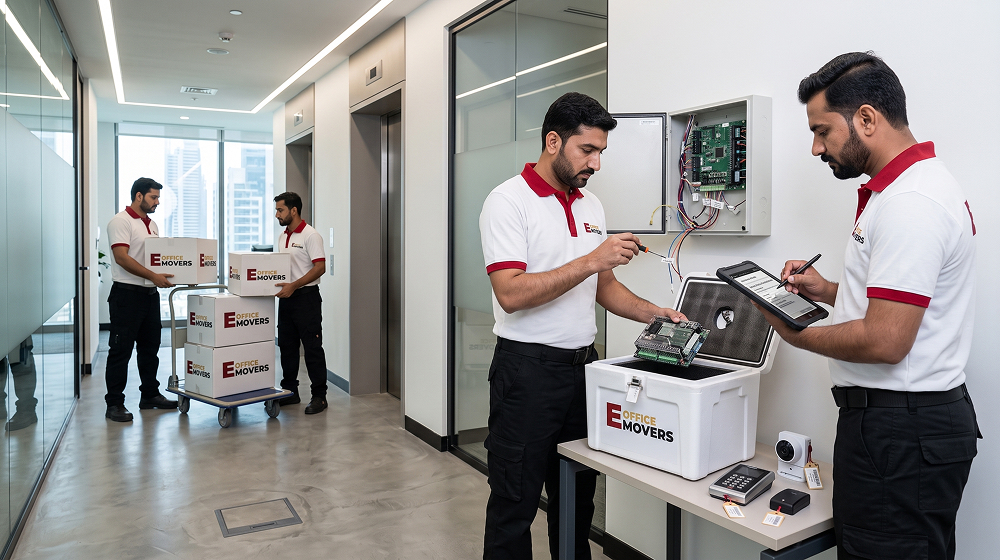
Security during an office move covers building access control, equipment protection, data confidentiality and the new premises’ own access systems. A move temporarily opens a business up, so the workflow has to close those gaps deliberately.
On move day, building access is controlled at both ends through the tower’s sign-in and permit system, so only authorised crews enter restricted areas. Sensitive equipment such as servers travels under supervision, and confidential documents are packed, sealed and tracked rather than left loose.
At the new office, access and security systems need setting up before staff arrive. Access cards, door controllers and CCTV are configured and tested, and the comms room is secured. Issuing access cards in advance is a small step that prevents the classic day-one problem of staff locked out of their own building.
A Real Office Move Scenario in Dubai
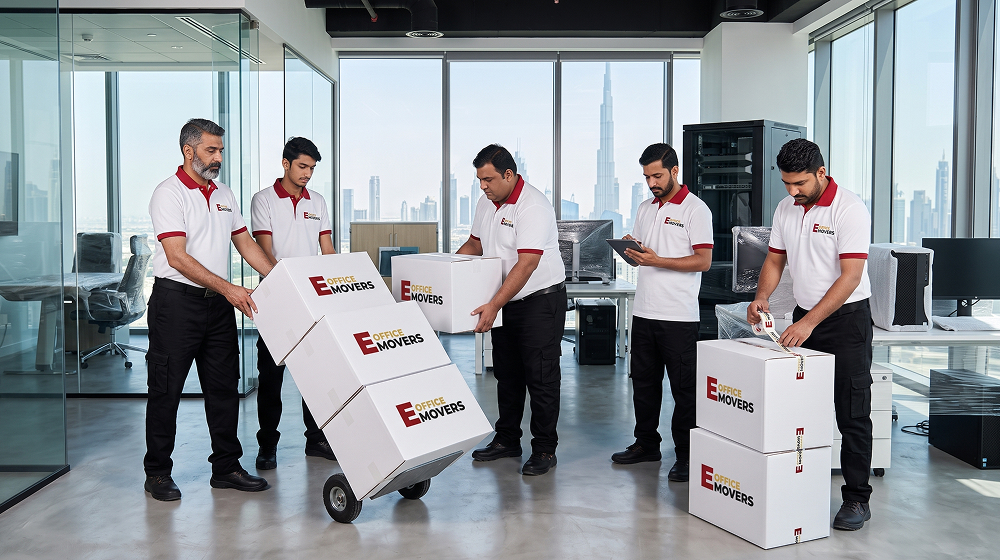
Consider a 30-person tech SME moving from a co-working space in Bur Dubai to a dedicated office in JLT. The pre-move stage ran six weeks: a site survey set the scope, the team agreed a layout, booked the mover and a Saturday freight lift slot, and ordered internet provisioning early.
On move day, crews loaded against a labelled plan, the small server rack moved first under supervision, and the network came up at JLT by midday. Building management signed the crews in against the approved permit, and workstations landed in their numbered desks.
The post-move stage caught two issues fast: three phones needed reconfiguring and one meeting room ran short on power points. Both were logged and fixed within the week. The business was fully trading by Monday with no lost client hours. The example is illustrative, but the pattern, careful pre-move, supervised move day, quick post-move snagging, is what a smooth Dubai relocation looks like.
Tips for Businesses New to Office Relocation
Businesses moving for the first time tend to learn the same lessons late. A few points save the most pain.
- Survey before you budget: A quote without a site survey is a guess, and guesses overrun.
- Book the lift early: Dubai towers run out of weekend move slots, so the freight lift booking sets your date as much as the mover does.
- Order the internet first: Telecom activation has the longest lead time, so it goes to the front of the queue.
- Label against a plan: A coded system mapping boxes to desks turns unloading into a checklist.
- Tell staff early: People plan their commute around an address, so communicate at confirmation, not the week before.
- Keep the review: A short debrief makes the next move faster and cheaper.
Follow the workflow in order, match the mover to the building, and a Dubai office move runs as a managed event rather than a stressful scramble.
Frequently Asked Questions
What are the three stages of an office move?
The three stages of an office move are pre-move preparation, move day and post-move settling. Pre-move covers the survey, planning, vendor booking and packing. Move day is the physical relocation and IT cutover. Post-move covers snagging, system checks and workspace optimisation. The pre-move stage is the longest and most decisive.
How long does an office move take in Dubai?
A typical Dubai office move takes 4 to 8 weeks from survey to settled occupation, with larger moves running longer. The longest-lead items, internet provisioning and freight lift availability, usually set the earliest realistic date. A clear pre-move stage keeps the timeline on track.
Do Dubai office buildings require a permit to move?
Many Dubai commercial towers require advance notice, a move permit and a booked freight lift slot, with rules varying by building. Building management often holds a deposit against damage to common areas and restricts moves to set hours. Confirm the exact conditions for your premises before fixing a date.
What do office movers in Dubai charge for?
Office movers in Dubai charge based on volume, distance, building access, specialist handling and timing. Servers, safes and high floors add to the cost, and weekend or after-hours moves carry different rates. Detailed pricing sits in the office relocation cost guide, and a surveyed quote is the only accurate figure.
How do you protect data and equipment during an office move?
You protect data and equipment by supervising sensitive items in transit, sealing and tracking confidential documents, and setting up access systems before staff arrive. Servers move under supervision, access cards are issued in advance, and the comms room is secured first. A move temporarily opens security gaps, so the workflow closes them deliberately.
What is the difference between a full-service and a budget office mover?
A full-service office mover handles packing, transport, IT and installation under one contract, while a budget operator covers only basic transport. Full-service movers carry the insurance, equipment and tower experience a corporate move needs. Budget operators suit small, simple moves but leave a business exposed on a complex one.
Ali Al-Refai is an expert in the moving and logistics industry, with over 12 years of experience in managing both local and international moving operations. He has worked extensively in relocation planning, packing, and logistics, ensuring seamless and efficient transitions for individuals and businesses alike.
His expertise lies in optimizing moving processes, reducing costs, and ensuring the safe handling of items during relocation. Ali regularly shares insights and practical tips on best practices in moving, aiming to help people and companies achieve smoother, cost-effective relocations.