
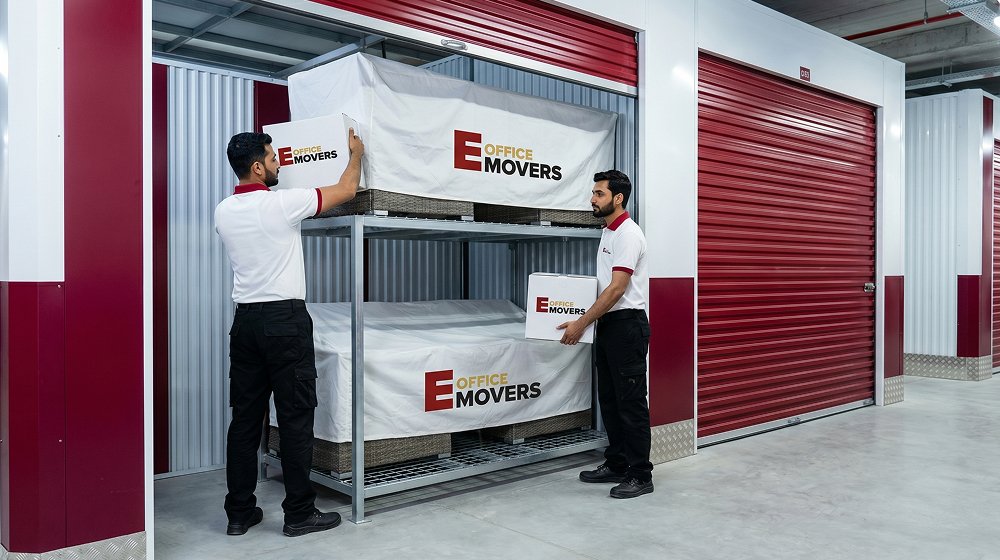
Choosing office movers in Dubai comes down to eight verified criteria: a valid trade license, liability insurance, commercial relocation experience, in-house IT capability, building permit handling, a survey-based quotation, furniture reinstallation with asset tracking, and owned crew and fleet. A business that checks these eight points before signing reduces the two biggest relocation risks, which are unexpected downtime and damaged assets.
Office relocation in Dubai is a regulated, building-controlled process, not a simple van hire. The wrong mover delays the move date, stalls at a tower’s loading bay, or mishandles a server rack. This guide explains what office movers do in the Dubai market, then walks through the eight criteria that separate a professional office moving company from a general transport service.
What Are Office Movers in Dubai?
Office movers in Dubai are commercial relocation companies that move a business from one premises to another, including packing, IT equipment, furniture, and building approvals. Professional office movers operate as project managers, because a corporate move in Dubai involves building NOCs, free zone clearances, and scheduled lift access that a residential move never touches.
The market holds several types of office movers. Full-service commercial movers run the relocation end to end. Standard local movers carry furniture and boxes with limited IT handling. Specialist IT movers focus on server rooms and networking hardware. Storage-integrated movers combine the move with commercial warehousing. Knowing which type a company actually is matters more than the logo on the truck, which is why the criteria below focus on verifiable evidence.
How to Choose Office Movers in Dubai
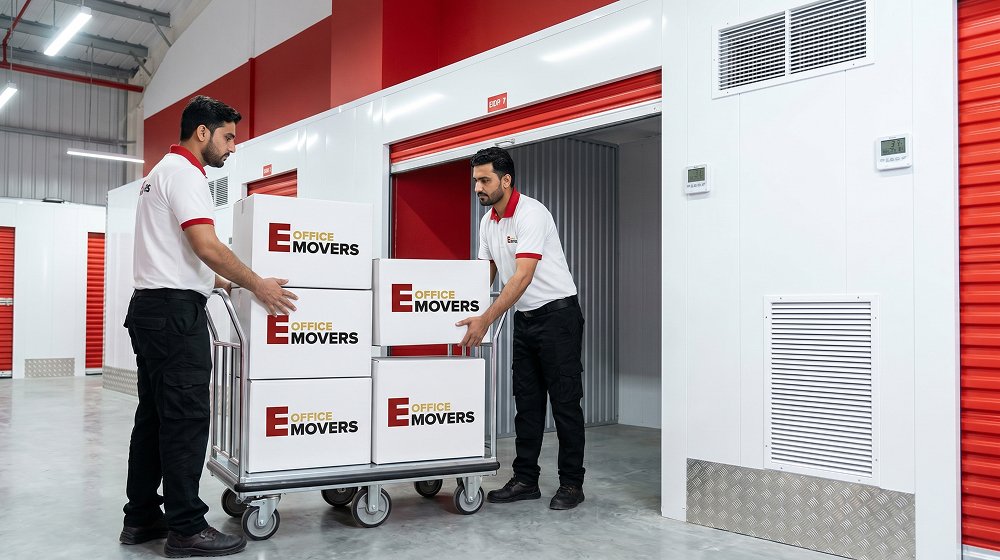
To choose the right office movers in Dubai, assess each candidate against eight criteria before requesting a quotation. The criteria run in order of importance, starting with legal and financial protection and moving toward operational capability.
1. Verify the Trade License and Legal Registration
Verify that the mover holds a valid UAE trade license covering moving and relocation services, issued either by the Dubai Department of Economy and Tourism (DET) or a relevant free zone authority. A licensed office moving company in Dubai appears on the official register and issues invoices under its registered name.
Ask for the license number and check the activity listed on it. Some transport companies hold a general goods license without a moving or storage activity, which signals an informal operator. A registered business relocation Dubai provider also carries a TRN for VAT, which legitimate corporate vendors always supply on request.
2. Confirm Liability Insurance and Goods-in-Transit Coverage
Confirm the mover carries goods-in-transit insurance and public liability cover, and ask for the certificate of insurance. Insurance protects the value of your assets during the move and covers any damage to the building’s lobby, lifts, or common areas.
Most Dubai towers require proof of insurance before issuing a move permit, so a professional mover keeps the certificate ready. A company that hesitates to share it, or that offers only a vague verbal assurance, exposes your business to the full replacement cost of any damaged server, monitor, or furniture unit.
3. Check Commercial Relocation Experience and Client References
Check that the mover has completed commercial office relocations, not only residential or household moves. Corporate movers in Dubai understand floor plans, after-hours scheduling, and the difference between a 10-desk SME and a multi-floor headquarters.
Request two or three references from recent office moves of a similar size. A credible office relocation services Dubai provider names the districts and building types it has worked in, such as towers in Business Bay, DIFC offices, or DMCC units in JLT. Experience in your destination district is a strong signal, because the mover already knows the building’s access rules.
4. Assess In-House IT and Server Relocation Capability
Assess whether the mover employs IT technicians for server and equipment relocation, rather than assigning general labourers. IT relocation is the highest-risk part of any office move, since a mislabelled cable extends downtime across the whole business.
Ask how the team handles a server room. A professional answer describes photographing port and cable configurations before disconnection, packing hardware in anti-static (ESD) materials, and reinstalling against the saved configuration map. Businesses requiring IT equipment relocation should treat this criterion as non-negotiable. A mover that describes servers as “just more boxes” lacks the capability.
5. Confirm Building Permit and Free Zone NOC Handling
Confirm the mover arranges building NOCs, move permits, and free zone clearances as part of the service. Dubai’s commercial buildings control who enters and when, and free zones such as DMCC, DIFC, and Dubai Internet City require the moving crew to register for access.
A mover experienced in your district handles this paperwork before move day and books the freight elevator for a fixed window. A business that arranges its own permits often discovers the requirement late, which pushes the move date back. Ask directly: who secures the NOC and the gate passes, you or the mover? The right answer is the mover.
6. Demand a Survey-Based Written Quotation
Demand a written quotation produced after a physical site survey, not a flat price quoted over the phone. A surveyor who inspects both offices records the furniture volume, the IT footprint, and the lift access, then prices the move against real conditions.
A phone quote without a survey almost always changes on move day, usually upward. The written quotation should itemise packing materials, labour, transport, dismantling, and any building deposits. Transparent pricing from an office shifting services Dubai provider lets you compare candidates on the same scope rather than on a vague headline figure.
7. Verify Furniture Dismantling and Reinstallation with Asset Tracking
Verify that the mover dismantles and reassembles furniture and tracks every item on an inventory manifest or asset register. Modular workstations, partitions, and storage units require correct disassembly, and the hardware from each unit must be bagged and tagged to prevent loss.
A genuine full-service contract includes reinstallation to the new floor plan, not just delivery to the door. Ask how the crew labels crates. A sequential, colour-coded labelling system mapped to desks and rooms is what lets staff resume work the next morning instead of searching through unmarked boxes.
8. Inspect Crew, Fleet, and Equipment Ownership
Inspect whether the mover uses its own trained crew and vehicles, or subcontracts day labour and rented trucks. An owned crew follows a consistent process and carries accountability through the chain of custody. Subcontracted labour, hired by the day, has no stake in your assets.
Ask about the team’s equipment: closed commercial vehicles with tail-lifts, plastic crates, floor and wall protection, and trolleys for heavy loads. A serious office movers and packer operation owns this equipment because it runs moves every week. A company that rents everything on demand is assembling the service around your booking, which raises the risk of delays.
What Mistakes Should Businesses Avoid When Choosing Office Movers?
The most common mistakes are hiring on price alone, skipping the survey, and using a residential mover for a corporate move. Each mistake produces the same result: a relocation that runs over time and over budget.
Businesses new to office relocation often repeat these errors:
- Choosing the lowest quote without checking what the scope excludes, then paying extras on move day
- Booking a residential mover that arrives without DMCC or DIFC crew registration and stalls at building security
- Assuming the mover handles permits when the contract never mentioned them, which delays the move date
- Treating IT as ordinary cargo, leading to unlabelled cabling and extended network downtime
- Moving during business hours instead of scheduling an evening or weekend slot to protect productivity
A practical example: a startup relocating within JLT hires a cheap general mover, skips the survey, and learns on the day that the DMCC tower requires pre-registered crew and a booked service lift. The move slips by a full working day. A professional office movers Dubai team would have cleared both before arrival.
How Much Do Office Movers Cost in Dubai?
Office movers in Dubai price relocations against the survey, with office size and IT volume carrying the most weight. The main cost factors include the number of workstations, furniture volume, server and IT quantity, floor level and lift access, distance between premises, packing materials, and whether the move runs after hours.
A business downsizing within the same district pays less than a company moving a full headquarters with a heavy server room across the city. Building security deposits at the destination tower also sit on the quote, though most are refundable after a clean handover. Because pricing is volume-based, the survey-based quotation from criterion six is the only reliable way to compare commercial movers Dubai providers fairly.
Frequently Asked Questions
How do I choose a reliable office moving company in Dubai?
Choose a reliable office moving company in Dubai by verifying its trade license, liability insurance, commercial relocation experience, in-house IT capability, and permit handling. Request a survey-based written quotation and confirm the mover uses its own crew rather than subcontracted day labour.
Should office movers in Dubai be licensed and insured?
Yes, office movers in Dubai should hold a valid UAE trade license and carry goods-in-transit and public liability insurance. Most commercial towers require proof of insurance before issuing a move permit, so a professional mover supplies the certificate on request.
Do I need a special mover for IT and server relocation?
Yes, IT and server relocation needs a mover with in-house technicians who document cable configurations and use anti-static packaging. General labourers risk mislabelled cabling and extended network downtime, which makes IT capability a key selection criterion.
How far in advance should I book office movers in Dubai?
Book office movers in Dubai two to four weeks ahead for a standard move, and earlier for large or multi-floor relocations. The lead time allows the mover to complete the survey, secure building NOCs, and book the freight elevator for a fixed window.
What is the difference between residential and office movers in Dubai?
Office movers manage building permits, IT equipment, furniture dismantling, and after-hours scheduling, while residential movers handle household goods. A corporate relocation in Dubai involves free zone clearances and controlled building access that residential movers are not equipped to manage.
Why should office movers conduct a site survey before quoting?
Office movers conduct a site survey to measure furniture volume, IT footprint, and lift access at both buildings. A survey-based written quotation reflects real conditions, while a phone quote without a survey usually changes on move day.
Ali Al-Refai is an expert in the moving and logistics industry, with over 12 years of experience in managing both local and international moving operations. He has worked extensively in relocation planning, packing, and logistics, ensuring seamless and efficient transitions for individuals and businesses alike.
His expertise lies in optimizing moving processes, reducing costs, and ensuring the safe handling of items during relocation. Ali regularly shares insights and practical tips on best practices in moving, aiming to help people and companies achieve smoother, cost-effective relocations.