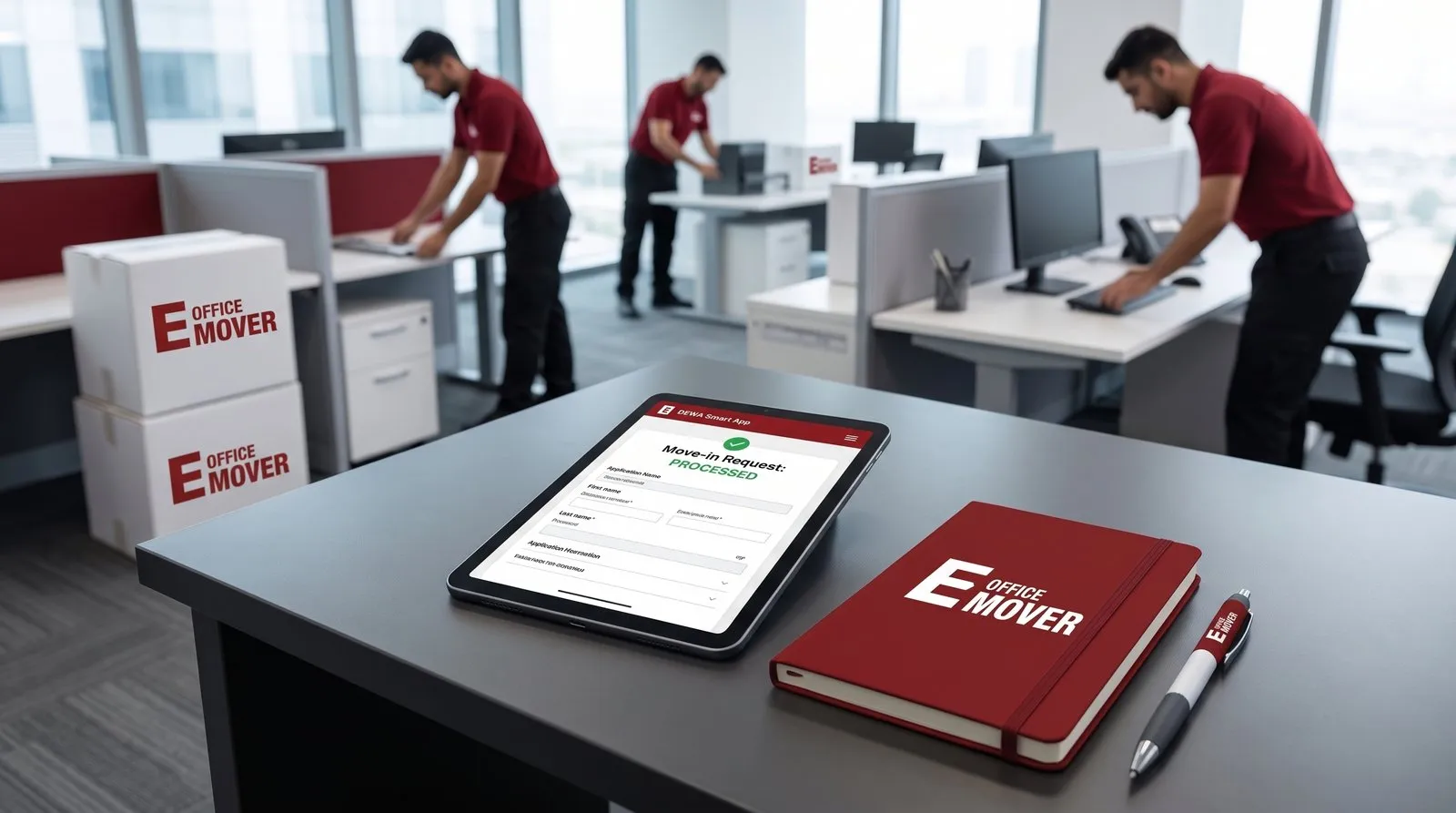
DIFC Office Relocation: Move Permit, Security Deposit & Building Rules

DIFC Office Relocation: Move Permit, Security Deposit & Building Rules
DIFC office relocation is the process of moving a company’s office into, out of, or within the Dubai International Financial Centre while meeting DIFC’s own property, registry and building rules. DIFC runs outside the mainland system. It has its own leasing law, its own property registrar and its own property management team, so a DIFC move follows a different path from a move in Business Bay or Downtown.
In practice, a DIFC office move comes down to three things: getting the move permit from building management, handling the lease security deposit under the DIFC Leasing Law, and following the tower’s rules on move day. This guide covers all three, plus the filings you need to make after the move.
What Makes a DIFC Office Move Different?
DIFC is an independent financial free zone with its own laws and courts. For an office move, that shows up in four ways:
- Leases fall under DIFC Law No. 1 of 2020 (the DIFC Leasing Law), not the Dubai rental law that governs mainland offices.
- DIFC does not use Ejari. Lease matters and security deposits go through the DIFC Registrar of Real Property.
- Property management is centralised for DIFC-owned buildings. The Gate Building, the Precinct Buildings and Gate Village are managed by DIFC’s property management team, with Tenant Relations as the tenant’s point of contact.
- Company address changes are filed with the DIFC Registrar of Companies, not with the Department of Economy and Tourism.
Privately owned towers inside DIFC, such as those along the DIFC boulevard, have their own building management companies. Their rules follow the same pattern, but you deal with the tower’s facilities team instead of DIFC Tenant Relations.
DIFC Move Permit: How It Works
A DIFC move permit is the building’s written approval to move furniture, equipment and boxes through its service areas on a set date and time. You need one from the building you are leaving and one from the building you are moving into.
Where to Apply
- DIFC-owned buildings (The Gate, Precinct Buildings, Gate Village): raise the request through the Property Services section of the DIFC Client Portal, or contact DIFC Tenant Relations. The DIFC Tenant Manual sets out the facilities, security, parking and fit-out rules that apply.
- Privately owned towers in DIFC: apply to the tower’s building management or facilities team, usually by email or through their tenant portal.
What Building Management Usually Asks For
- Completed move request form with the date, time window and unit number
- Company trade licence copy
- Moving company’s trade licence
- Moving company’s insurance certificate (public liability), often naming the building owner
- Method statement or short move plan for larger moves
- Crew list with Emirates ID or passport copies
- Truck plate numbers and sizes
- Refundable damage deposit or cheque for the service lift and common areas, where the building requires one
Submit at least one to two weeks before the move. Buildings that are busy at month-end fill their move slots early.
Move Windows and Access
DIFC towers restrict moves to set windows so lobbies and passenger lifts stay clear for tenants and visitors. Most buildings allow moves only through the service lift and loading bay, and many push larger moves outside core business hours. Confirm these points in writing before you book the movers:
- Allowed move days and hours
- Service lift booking slots and maximum load
- Loading bay size and truck height limits
- Parking for the moving truck
- Whether security escorts are required
DIFC Security controls access across the centre, so if your crew or truck details don’t match the approved list, expect to be stopped at the loading bay.
Security Deposit Rules for DIFC Office Moves
“Security deposit” means two different things in a DIFC move. Keep them separate, because they follow different rules.
1. The Lease Security Deposit
This is the deposit you paid when you signed your lease. Under the DIFC Leasing Law:
- The landlord must submit the security deposit to the DIFC Registrar of Real Property within 30 days of receiving it. The Registrar holds it, not the landlord.
- The deposit is capped at 10% of the annual rent for leases under the law.
- It can be used for unpaid rent, damage beyond normal wear and tear, or other breaches of the lease.
- It is released when both parties agree, or after a DIFC Courts decision if there is a dispute.
- An unclaimed deposit is forfeited six months after the lease ends. Many tenants lose money here simply because nobody follows up after the move.
2. The Building Move Deposit
This is a separate, refundable deposit some buildings take before a move to cover damage to the service lift, walls, floors or loading bay. The amount is set by each building. It is refunded after building management inspects the route and signs off. Ask your movers to protect lifts, door frames and floors, and take photos of the route before and after the move so there’s no argument about existing damage.
Condition Reports at Handover
The DIFC Leasing Law allows the landlord to prepare a condition report on the premises. If the landlord sends you one, you have 20 days to respond. If you don’t, the report can be used as binding evidence of the unit’s condition. Read it carefully, compare it with your move-in photos, and reply in writing if you disagree. Disputes over conditions go to an independent expert.
DIFC Building Rules to Follow on Move Day

DIFC buildings are strict because they house banks, law firms and regulators that run during the day. Common rules include:
- Service lift only. Passenger lifts and lobbies are off-limits for furniture and crates.
- Lift and wall protection. Padding in the service lift and corner guards along the route are usually required.
- No blocking of fire exits or corridors. Staging areas must be agreed with building management.
- Trolleys with rubber wheels to protect flooring.
- Waste removal. Cardboard, packing material and old furniture must leave with the movers, not in the building’s bins.
- Uniformed, identifiable crew matching the approved list.
- Hot works, drilling or installation need separate approval, often a permit to work.
If your new unit needs fit-out before the move, the fit-out goes through DIFC’s fit-out process and a Dubai Civil Defence inspection. Finish fit-out before booking the move date, because a failed inspection pushes everything back.
DIFC Office Relocation Timeline
| Timing | Task |
|---|---|
| 3 months before | Serve notice on the current lease; review reinstatement obligations |
| 10 to 8 weeks before | Sign new lease; start fit-out approvals |
| 8 to 3 weeks before | Fit-out works and Civil Defence inspection |
| 2 weeks before | Submit move permits; book lifts and loading bays |
| 1 week before | Confirm crew list, truck plates and internet activation |
| Move day | Move, set up and check both units |
| Within 14 days after | Notify DIFC Registrar of Companies of the new registered office |
| Within 20 days of receiving it | Respond to the landlord’s condition report |
| Within 6 months of lease end | Claim the lease security deposit |
For a detailed plan, see our office relocation timeline for Dubai.
Common Mistakes in DIFC Office Moves
- Treating DIFC like the mainland
- Forgetting reinstatement
- Ignoring the condition report
- Losing the deposit to the deadline
- Booking the move before fit-out sign-off
- Late Registrar filing
How E Office Movers Handles DIFC Moves
We prepare the documents DIFC buildings ask for, including our trade licence, insurance certificate, crew list and truck details, and we work with Tenant Relations or the tower’s facilities team to lock in lift and loading bay slots. On move day our crew protects lifts, walls and floors, moves within the approved window, and removes all packing waste. We set up furniture and IT in the new unit so your team can start work straight away.
Planning a move in DIFC? Speak to ou roffice movers in Dubai for a site survey and a move plan built around your building’s rules.
Frequently Asked Questions
Do I need a move permit for a DIFC office relocation?
Yes. You need approval from the building you are leaving and the building you are moving into. In DIFC-owned buildings, requests go through the DIFC Client Portal or Tenant Relations. In private towers, apply to the building’s facilities team.
Who holds my security deposit in DIFC?
Under the DIFC Leasing Law, the landlord must submit your security deposit to the DIFC Registrar of Real Property within 30 days of receiving it. The Registrar holds it until both parties agree to its release or the DIFC Courts decide a dispute.
What happens if I don’t claim my DIFC security deposit?
A deposit that is unclaimed six months after the lease ends is forfeited. Start the release process as soon as the handover inspection is done.
Does DIFC use Ejari for office leases?
No. DIFC has its own leasing law and property registrar, so leases and deposits are handled by the DIFC Registrar of Real Property, not Ejari.
How long do I have to update my registered address after moving in DIFC?
You must notify the DIFC Registrar of Companies of a change of registered office within 14 days of the change.
Can I move my DIFC office on a weekend?
Often yes, and many DIFC buildings prefer moves outside business hours. The allowed days and times depend on the building, so confirm them when you apply for the move permit.