Ejari Registration After an Office Move in Dubai: Process, Documents & Timeline
Moving an office in Dubai is not only about transporting furniture, equipment, and files to a new location. Businesses also need to complete several administrative updates after shifting operations. A smooth office relocation in Dubai requires attention to tenancy documents, company records, building requirements, and government-related procedures.
One important step after moving into a new commercial space is reviewing your tenancy registration status. For many businesses, updating Ejari details after an office move helps keep property records accurate and supports future administrative processes.
Many companies focus entirely on the physical relocation and forget that the new office address may need to be reflected across different records. Preparing these updates early helps avoid delays with licensing, banking, and other business operations.
Why Ejari Matters After Moving Your Office in Dubai
Ejari is the official tenancy registration system used in Dubai to record rental contracts. When a company moves to a different office location, the new tenancy agreement becomes an important part of proving where the business operates.
For businesses, updated tenancy records help maintain consistency between:
- Commercial lease documents
- Company address information
- Trade license records
- Banking details
- Government-related services
A relocation is only fully complete when both the physical workplace and official documentation are updated.
Companies planning a move within a free zone should also prepare the required paperwork before shifting operations. A properly planned free zone office relocation Dubai process combines moving logistics with compliance preparation to reduce unnecessary delays.
Does an Office Move Require New Ejari Registration?
When a business changes its office location, the previous tenancy contract no longer represents the company’s current premises. In many cases, a new commercial tenancy agreement needs to be registered through Ejari.
The exact requirements depend on several factors, including:
- Type of company setup
- Location of the new office
- Property arrangement
- Licensing authority requirements
For example, mainland companies and free zone businesses may follow different procedures when updating their office address.
Before moving, businesses should confirm whether their new premises require additional approvals or documentation from their relevant authority.
Ejari Registration Process After an Office Relocation
The Ejari registration process is straightforward when all documents are prepared correctly.
1. Finalize the New Office Tenancy Contract
Before applying for Ejari, businesses need a valid tenancy agreement for their new commercial space.
The contract should include accurate information such as:
- Tenant/company details
- Property information
- Lease period
- Landlord details
- Commercial usage information
Any mismatch between company documents and tenancy information can create delays during registration.
2. Prepare Required Documents
Businesses should prepare the necessary documents before submitting their application.
Common documents include:
- Signed tenancy contract
- Trade license copy
- Company documents
- Tenant identification documents
- Property details
The Dubai Land Department outlines the required documents and application steps for registering or renewing tenancy contracts through its Ejari services. Having these documents ready before the office move makes the transition much smoother.
3. Submit the Ejari Application
Businesses can complete the process through approved Ejari channels.
The application process generally involves:
- Entering tenancy details
- Uploading required documents
- Reviewing information
- Completing payment
- Receiving the registration certificate
According to Dubai Land Department, applicants can complete the process through Ejari systems or approved service channels after submitting the required information.
- Receive the Ejari Certificate
After approval, the registered tenancy certificate confirms that the new office lease has been officially recorded.
Businesses should keep this document safely because it may be required for future administrative updates.
How Long Does Ejari Registration Take After an Office Move?
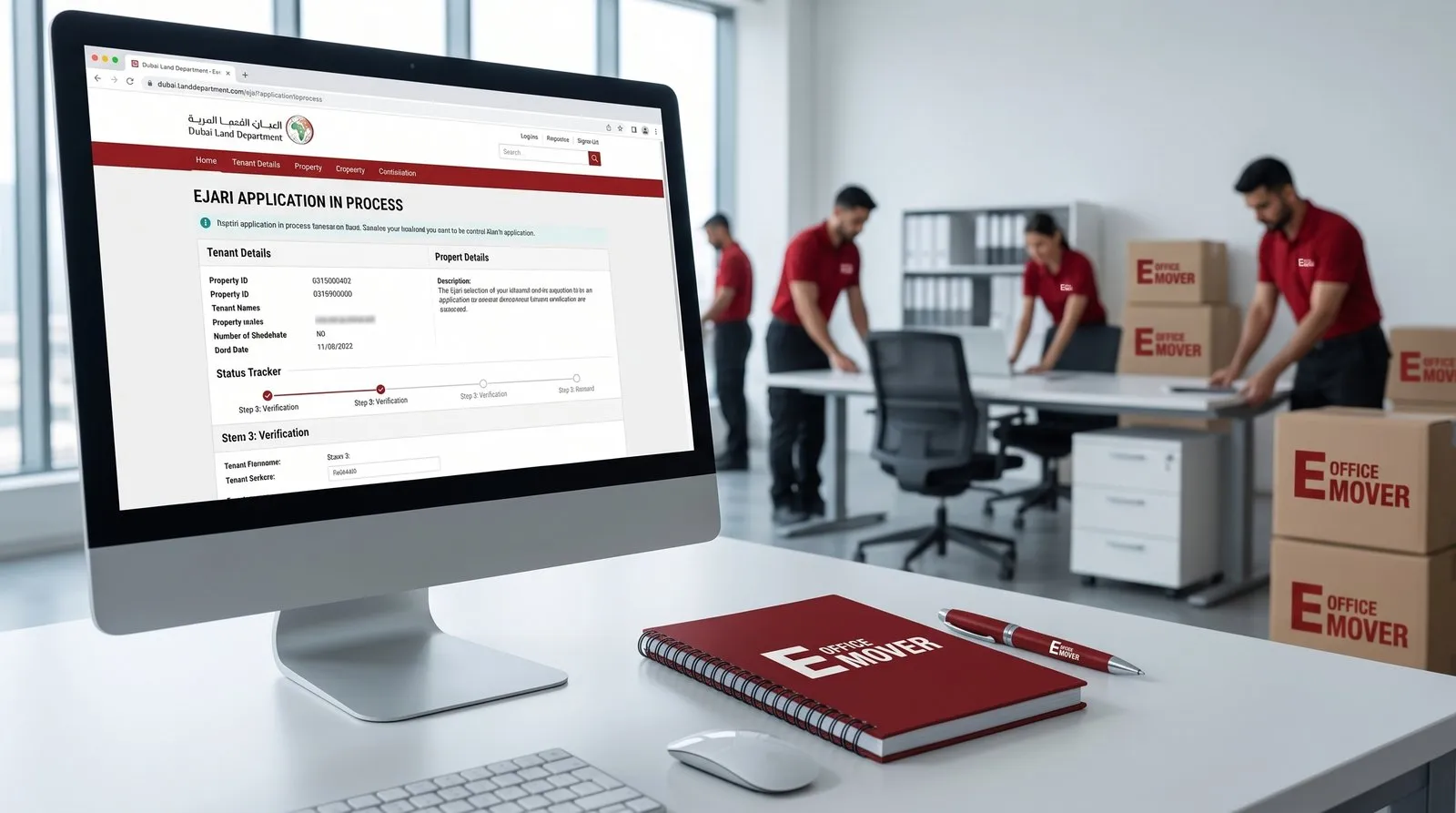
The timeline depends on whether all documents are complete and whether the submitted information matches official records.
A smooth application can usually move quickly, but delays may happen because of:
- Missing documents
- Incorrect tenancy details
- Property information issues
- Company information differences
- Delayed approvals
For this reason, businesses should begin the process soon after signing the new office lease instead of waiting until all relocation activities are finished.
Documents to Prepare Before Moving Offices
A successful office move requires preparation beyond packing and transportation.
Before relocation day, businesses should organize:
Company Records
- Trade license copy
- Company registration documents
- Authorized representative details
- Existing office information
New Office Information
- Signed tenancy agreement
- Landlord details
- Property information
- Building access requirements
Relocation Documents
- New office address
- Utility arrangements
- Access approvals
- Department relocation plans
Keeping these records organized helps teams complete post-move requirements without unnecessary interruptions.
Mainland vs Free Zone Office Relocation Requirements
The process after an office move may differ depending on whether the company operates under mainland licensing or a free zone authority.
Mainland Businesses
Mainland companies generally need to ensure their new office information matches their licensing records and tenancy documentation.
The new premises should meet the required commercial conditions before completing address updates.
Free Zone Businesses
Free zone companies often need to coordinate with their specific authority before changing office locations.
Depending on the free zone, businesses may need to confirm:
- Office eligibility requirements
- Approval procedures
- Updated company address records
- Supporting tenancy documents
This is why companies should include administrative preparation alongside their physical relocation plan.
Common Ejari Mistakes After an Office Move
Many businesses face unnecessary delays because of small documentation mistakes.
Moving Before Completing Documentation
Some companies move first and handle paperwork later. This can create issues if official records need immediate updates.
Incorrect Information in Documents
Company names, license details, and tenancy information should match across all records.
Ignoring Previous Office Responsibilities
Before leaving the old office, businesses should complete any pending obligations related to the previous lease.
Not Checking Free Zone Requirements
Every free zone may have different procedures. Assuming the process is identical everywhere can cause delays.
Office Relocation Checklist After Moving Into a New Premises
Once the physical move is complete, businesses should review the following:
Documentation
Confirm new tenancy agreement
Complete Ejari registration where required
Update company records
Store new office documents securely
Operations
Update suppliers and service providers
Inform employees about the new location
Confirm internet and utility arrangements
Compliance
Review licensing information
Check address consistency across records
Maintain copies of all relocation documents
Complete Your Office Move Without Administrative Delays
An office relocation in Dubai involves two separate journeys:
- Moving your workplace physically
- Updating the documents connected with that workplace
Furniture, equipment, and files can be transferred within a short period, but tenancy records and business information require careful attention.
Completing Ejari registration after an office move helps businesses maintain accurate property records and supports a smoother transition into their new location.
By planning documentation early, coordinating with relevant authorities, and working through each post-move requirement systematically, companies can avoid unnecessary disruptions and start operating from their new office with confidence.